Orbis Environmental Consulting

Our Cultural Resource specialists can help you manage the risk of impacting important historic or archaeological places.

When Wildlife Takes a Summer Vacation

Ask anyone and they may tell you hibernation is when an animal “sleeps” through the winter. Although this is a very simplistic definition, the concept is correct.

The word hibernation is from Latin and means “to spend the winter”.

Wildlife uses hibernation to get through the winter by utilizing mechanisms to survive the cold or the lack of food. There are many examples of hibernation, including frogs freezing solid, turtles in mud underwater, chipmunks slowing their heartbeats, bats in caves, and the most famous example: bears in winter dens.

So, what would the opposite of hibernation be? Is there such a thing?
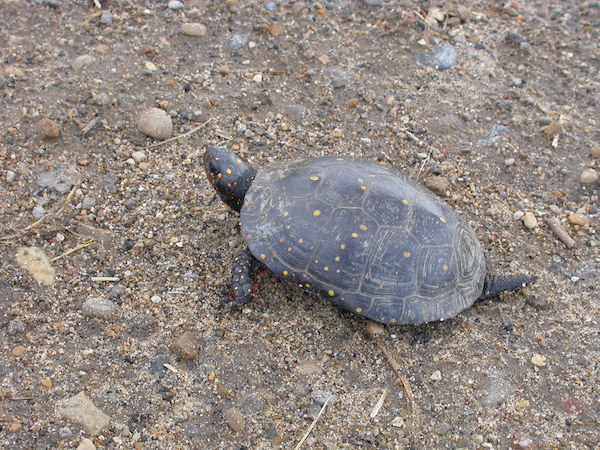
 

Spotted Turtle – “I hibernate AND estivate. I know the difference. Do you?


Estivation – “Summer Hibernation”

Summer is typically known as a time of plenty for wildlife. So why would wildlife need to survive through the summer in the same manner they do during the winter? Well “summer hibernation” does exist and it is called estivation.

Estivation is used by many species of wildlife including reptiles, amphibians, fish, snails, worms, and insects. Wildlife can go into dormancy during times of very high temperatures and/or drought.

Have you ever been active on a hot humid day and felt exhausted just because of the temperature? Heat exhaustion and heat stroke are a real threat to humans and likewise to wildlife. Because water is important to all living things, many wildlife species can be found near water sources. Going dormant to conserve water, especially for species that spend most of their time in water, could be crucial for survival.

A local example of estivation in Indiana is the spotted turtle (Clemmys guttata, candidate for federal endangered species listing and state-endangered).

Spotted turtles are usually found in still waters like ponds and flooded wetlands, and will forage in damp woods and fields. Spotted turtles are hard to find in the summer and warmer parts of autumn because they “go to ground” to wait out dryer, hotter periods of the summer. There are accounts of spotted turtles being under sphagnum moss and humus 300 feet (90 meters) away from a water source.

Now you have learned a new word, concept, and why a creature in your backyard sometimes takes a vacation during the summer. An estivation vacation may not be a trip or for fun, but it is a great adaptation for survival.

Share the Post:

Tessa M. Aby-Kruger

Botanist

Tessa is a geologist, botanist and vegetation ecologist with over 10 years of experience managing and conducting projects, specializing in ecological and floristic inventories, rare plant surveys, and vegetation monitoring. She also performs wetland evaluations and is a guided hike leader.

Jeremy Sheets

Senior Wildlife Biologist, Vice President

Jeremy is a founding member of Orbis and directs its ecological and wildlife surveys, assessment and planning services, and brings over 20 years’ experience conducting various wildlife surveys with a focus on bat ecology and urban wildlife management.


Jeremy has managed wildlife projects for private firms and the public sector including for wind facilities, pipelines, roadways, military bases, and airports. Jeremy is proficient in wildlife management/control techniques, wildlife identification, threatened and endangered species, and surveying and analysis techniques for mammals, birds, reptiles, amphibians, fish, and insects. Jeremy is a Federal Aviation Administration (FAA) Qualified Airport Wildlife Biologists who develop Wildlife Hazard Assessments (WHA) and Wildlife Hazard Management Plans (WHMP) for airports. Jeremy is qualified to inspect erosion, sediment and stormwater plans, and their implementation. Furthermore, Jeremy is federally permitted to conduct endangered bat surveys in USFWS Regions 3, 4, 5, and 6 and includes acoustic surveys, mist-netting, and radio telemetry.

J Ryan Duddleson​

Senior Archaeologist, Principal

Ryan is a founding member of Orbis and directs its cultural resource management services, and brings over 20 years’ experience helping clients assess and minimize the risk of impacting places with cultural value.


Ryan works with public sector clients including federal, state, and municipal government, as well as private firms in energy, transportation, industrial, and development sectors. He also coordinates with agencies and consulting parties involved with the National Environmental Policy Act, Section 106 of the National Historic Preservation Act, and other related cultural resource laws and regulations. He performs archival research, analysis, and excavation. Ryan also has experience in artifact and archival curation. He has applied innovative techniques to traditional artifact analysis, such as examining organic residues from prehistoric pottery to determine prior contents. Ryan also has experience with human remains in archaeological settings. Ryan meets the Secretary of the Interior’s Standards and Guidelines for Archaeology and Historic Preservation, 48 FR. 44716 and is a Qualified Professional Archaeologist in Indiana, Illinois, Iowa, Michigan, Ohio, Pennsylvania, and Wisconsin.