Orbis Environmental Consulting

Our Cultural Resource specialists can help you manage the risk of impacting important historic or archaeological places.

A road, a town, and a cemetery: Bioblitz at the McVey Memorial Forest

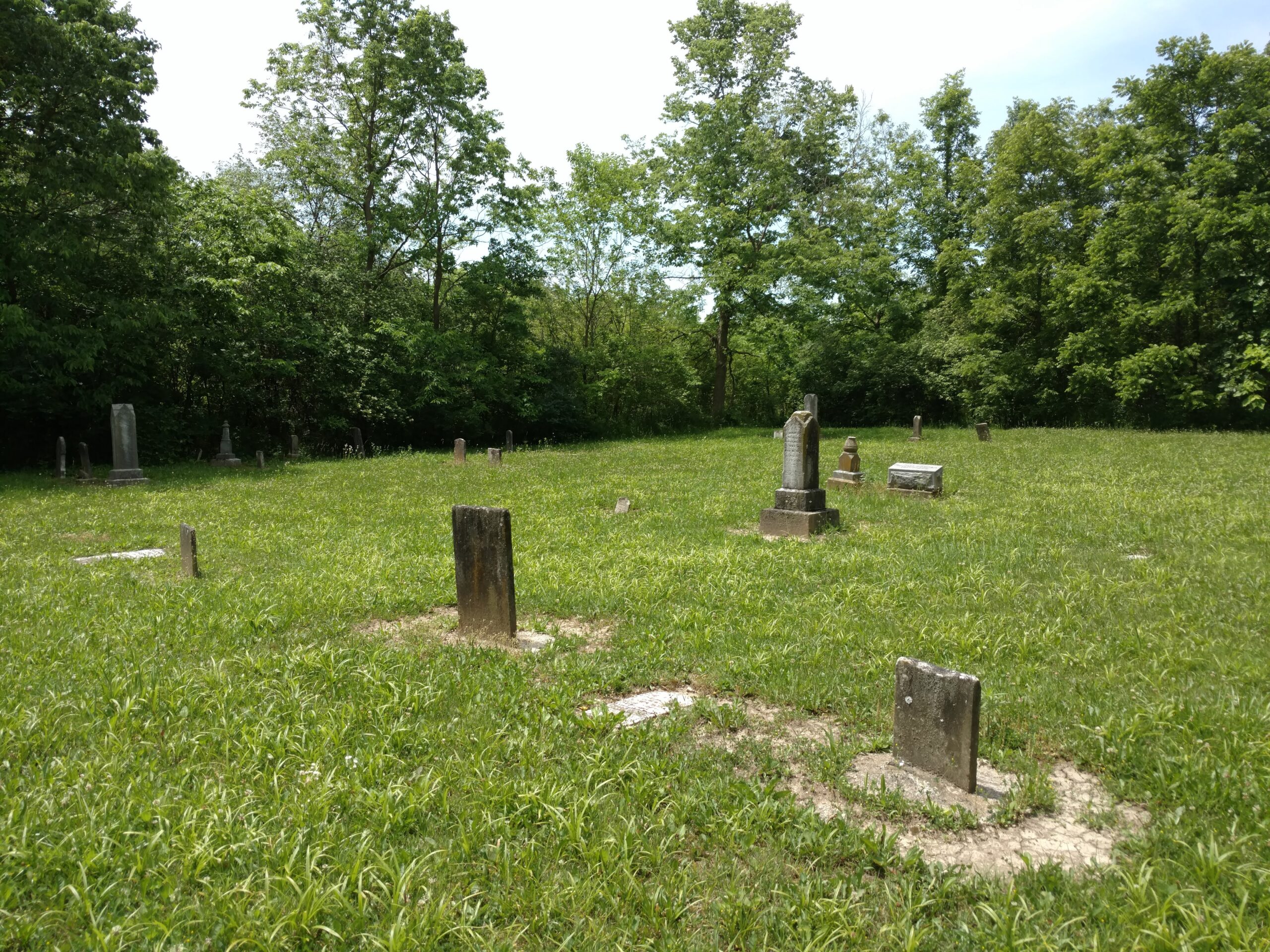
IMG_20170610_124559962
The Steubenville Pioneer Cemetery

Volunteers from Ball State University joined us for an above ground survey for archaeological and historical resources in the McVey Memorial Forest near Muncie, Indiana.

We were participating in an event called a BioBlitz – which is a 24 hour long event where scientists attempt to document all the species in a particular area. We focused our search for signs of past human activity, but other scientists were looking for species birds, mammals, insects, plants, and fungi. Everyone is working on putting results together and we’ll try to link to information when it becomes available. We may have more to say about the cultural resources we saw with some research, but here’s the highlights.

We encountered known cultural resources including a pioneer cemetery, but also found the historical route of County Road West 750  North as it once followed the Mississinewa River. This original route also crossed Bush Creek, where we found remains of a collapsed bridge.

Remnants of historic bridge crossing Brush Creek
Remnants of an historic bridge crossing Brush Creek


Historic records show an old pioneer town, known as Steubenville, in the area now within the McVey Forest.

1865 Map of Randolph County showing the former town of Steubenville
1865 Map of Randolph County showing the former town of Steubenville – note the cemetery


Our survey did not observe any remnants of historic structures in this area, but this location contains recently planted trees which might obscure historic foundations and/or artifacts. Local historians have known about the Steubenville Townsite for some time, but it seems that most of the information about the town comes from historic documents, and it’s likely that archaeological investigation of the townsite could yield new information about Steubenville.

There are also known prehistoric archaeological sites within the forest property but these areas were also obscured by heavy vegetation.  Below ground archaeological survey may also be able to locate remnants of  these prehistoric sites.

Finally, the team identified areas in the forest that have not been previously surveyed but may contain additional unidentified prehistoric sites.
Share the Post:

Tessa M. Aby-Kruger

Botanist

Tessa is a geologist, botanist and vegetation ecologist with over 10 years of experience managing and conducting projects, specializing in ecological and floristic inventories, rare plant surveys, and vegetation monitoring. She also performs wetland evaluations and is a guided hike leader.

Jeremy Sheets

Senior Wildlife Biologist, Vice President

Jeremy is a founding member of Orbis and directs its ecological and wildlife surveys, assessment and planning services, and brings over 20 years’ experience conducting various wildlife surveys with a focus on bat ecology and urban wildlife management.


Jeremy has managed wildlife projects for private firms and the public sector including for wind facilities, pipelines, roadways, military bases, and airports. Jeremy is proficient in wildlife management/control techniques, wildlife identification, threatened and endangered species, and surveying and analysis techniques for mammals, birds, reptiles, amphibians, fish, and insects. Jeremy is a Federal Aviation Administration (FAA) Qualified Airport Wildlife Biologists who develop Wildlife Hazard Assessments (WHA) and Wildlife Hazard Management Plans (WHMP) for airports. Jeremy is qualified to inspect erosion, sediment and stormwater plans, and their implementation. Furthermore, Jeremy is federally permitted to conduct endangered bat surveys in USFWS Regions 3, 4, 5, and 6 and includes acoustic surveys, mist-netting, and radio telemetry.

J Ryan Duddleson​

Senior Archaeologist, Principal

Ryan is a founding member of Orbis and directs its cultural resource management services, and brings over 20 years’ experience helping clients assess and minimize the risk of impacting places with cultural value.


Ryan works with public sector clients including federal, state, and municipal government, as well as private firms in energy, transportation, industrial, and development sectors. He also coordinates with agencies and consulting parties involved with the National Environmental Policy Act, Section 106 of the National Historic Preservation Act, and other related cultural resource laws and regulations. He performs archival research, analysis, and excavation. Ryan also has experience in artifact and archival curation. He has applied innovative techniques to traditional artifact analysis, such as examining organic residues from prehistoric pottery to determine prior contents. Ryan also has experience with human remains in archaeological settings. Ryan meets the Secretary of the Interior’s Standards and Guidelines for Archaeology and Historic Preservation, 48 FR. 44716 and is a Qualified Professional Archaeologist in Indiana, Illinois, Iowa, Michigan, Ohio, Pennsylvania, and Wisconsin.